
You've probably noticed it already. Conversations in restaurants feel harder. You ask "what?" more often. The TV goes a little louder each year. And somewhere in the back of your mind, a voice says: I should do something about this eventually.
That's exactly what Jennifer thought. For five years.
Then she learned something that changed everything: untreated hearing loss doesn't just make conversations harder. It accelerates cognitive decline at an alarming rate.
What Recent Research Actually Shows
Johns Hopkins researchers (Lin et al., 2013) conducted one of the most comprehensive studies on hearing and brain health ever published. Their findings were striking: adults with untreated hearing loss have a 50% increased risk of dementia compared to those with normal hearing.
Brain scans tell the story directly—areas responsible for memory and language processing show measurably less activity in people with untreated hearing loss. The brain isn't just affected by not hearing well. It's being reshaped by it.
The mechanism isn't mysterious. When your brain works overtime to process incomplete sound signals, it drains cognitive resources. You're not just hearing less—you're thinking less clearly, remembering less reliably, and aging faster cognitively. The mental strain and frustration of struggling to hear compounds every single day.
"The relationship between hearing and brain health is one of the most underappreciated connections in medicine. By the time people seek help, years of unnecessary strain have already accumulated."
— Adapted from National Institute on Deafness and Other Communication Disorders (NIDCD) research summariesResearch note: Research from Johns Hopkins (Lin et al.) and the National Institute on Deafness and Other Communication Disorders documents the hearing-cognition connection. Individual risk factors vary.

See the Research Behind the Hearing-Brain Connection
Scientists have spent decades studying what the inner ear actually needs. The findings may surprise you.
Learn More About the ResearchJennifer's Five-Year Wait
Jennifer is 58. She's a retired marketing director from Portland, Oregon—sharp, organized, and someone who raised three kids while managing a full career. She's also someone who convinced herself she'd "address it eventually."
Every morning she'd wake up with that familiar strain—the mental effort of filling in the gaps her ears weren't catching. Conversations with her book club became exhausting rather than enjoyable. She stopped going to group dinners because she was tired of saying "sorry, what?" She started nodding along to conversations she'd half-given-up following.
One afternoon, her daughter Sarah called. Midway through the conversation, she paused: "Mom, are you okay? You seem... distant."
It wasn't distant. It was tired. Brain tired.
Jennifer knew exactly what had happened. She'd been running a mental marathon every day just to hold normal conversations—and it was catching up with her. That's when she decided five years was enough. A colleague mentioned a supplement her elderly mother had been using. Jennifer was skeptical—she'd tried supplements before and found most of them vague, overpromised, and underdone—but the research behind this one caught her attention. She wanted to understand what was actually happening at the cellular level.
What Happens at the Cellular Level
Here's what most people don't know: hearing loss often starts not in the outer ear, but in your hair cells—the delicate sensory structures deep inside the cochlea that convert sound vibrations into neural signals your brain can read.
When these cells don't get adequate biological support, they decline faster. Blood flow to the inner ear diminishes. Oxidative stress increases. Inflammatory responses that were meant to be temporary become chronic background noise in the tissue itself. The signals that reach your brain become weaker and more fragmented.
Your brain compensates—but compensation has a cost. It borrows cognitive resources from other functions: memory consolidation, focus, emotional regulation. That's why people with hearing challenges often report feeling mentally drained even on quiet days.
So what if you could support the biological conditions that keep these cells healthy? What if you could nourish the systems your hearing depends on—before the decline becomes permanent?
The Formula That Changed Things for Jennifer
Scientists and hearing health researchers have identified specific nutrients that support the delicate biology of the inner ear. Jennifer discovered there's a supplement that combines all of them—research-backed, all-natural, and designed specifically to support what's happening at the cellular level.
The formula includes six ingredients, each selected based on published research about hearing health. We reveal them in detail below—because what's inside matters as much as what it does.
What matters right now: within 30 days of consistent use, Jennifer noticed something she hadn't expected. The mental strain began to quiet.
The Wedding She Almost Missed
Why Jennifer's transformation happened so quietly, most people wouldn't have noticed
Thirty days into using the supplement, Jennifer's granddaughter Emma got married.
It was held in a garden pavilion in late summer. Beautiful setting. Terrible acoustics. The kind of open-air venue where sound disperses before it reaches you, where every conversation competes with rustling leaves and the ambient hum of a crowd. The kind of place where hearing challenges hit hardest.
But this time was different.
Jennifer sat at a table with three of her oldest friends—women she'd known for thirty years. She heard the toasts without leaning in. She laughed at the jokes in real-time rather than a half-second later when she'd pieced together the punchline. She participated in the conversation without that familiar background effort. Her friends didn't have to repeat things. She didn't feel like she was struggling.
Later that night, her daughter Sarah pulled her aside.
"Mom, you seem... lighter. Like yourself again."
Jennifer stood there for a moment, taking that in. She realized the mental noise and strain that comes with struggling to hear had finally begun to quiet. She could relax into a conversation rather than fight her way through it. She could focus on what people were saying rather than expending energy trying to hear them at all.
For the first time in five years, her brain wasn't working overtime just to understand what people were saying. She slept that night without that underlying tension she'd grown so accustomed to she'd forgotten it was there.
Results not typical. Individual results vary based on starting point and consistency of use.
What Jennifer discovered: addressing hearing health isn't about waiting for symptoms to get worse. It's about supporting the biological systems that prevent decline in the first place—before the window for meaningful support narrows.
The Science Behind the Formula: Audifort
Audifort is the supplement Jennifer used. It's built on peer-reviewed research about what the inner ear actually needs to function optimally—not a collection of trending wellness ingredients, but a deliberate formula assembled around hearing biology specifically.
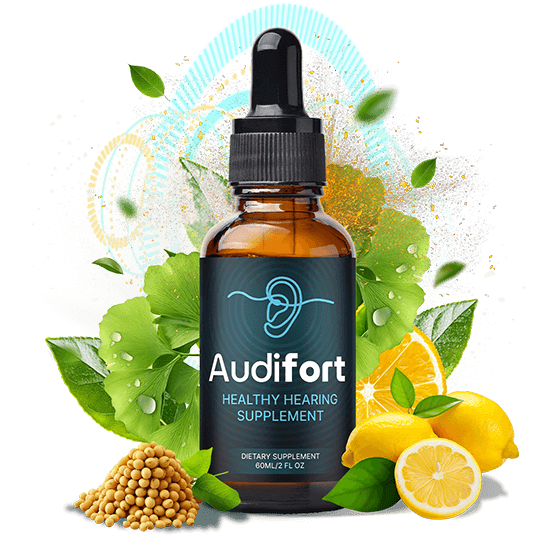
Here's what's inside and why each ingredient was chosen:
Maca Root — Traditionally used to support energy and cognitive function. Modern research suggests it may support healthy blood flow and endocrine balance, both of which play a role in how efficiently the inner ear is nourished.
Grape Seed Extract — Contains proanthocyanidins, compounds known for their powerful antioxidant properties. These help protect cellular structures in sensitive tissues—like the hair cells of the inner ear—from oxidative damage that accumulates over time.
Green Tea Extract — The primary active compound, EGCG, has been studied extensively for its ability to support cellular health and reduce oxidative stress in auditory systems. It's one of the most researched antioxidants in hearing health literature.
Capsicum Annuum (Red Pepper) — Contains capsaicinoids that support a healthy inflammatory response and promote circulation to delicate peripheral tissues, including those of the inner ear.
GABA — A primary inhibitory neurotransmitter in the brain. GABA supports relaxation and may help reduce the mental fatigue and strain that often accompanies the daily effort of processing degraded sound signals.
Gymnema Sylvestre — Used for centuries in Ayurvedic practice. Emerging research suggests specific compounds in this plant support nutrient absorption and metabolic processes relevant to ear health and circulation.

All natural. Non-habit forming. Made in the USA.
Discover the Complete Audifort Formula
Backed by a full 90-day money-back guarantee. See exactly how it works and what it costs on the next page.
See How Audifort Works90-day guarantee · All-natural ingredients · Made in the USA
The 90-Day Money-Back Guarantee
Jennifer's results took 30 days. Your results might take longer—or happen faster. Everyone's biology is different, and every person's starting point is their own.
That's why Audifort comes with a complete 90-day money-back guarantee. Use it for three full months. If it doesn't deliver the support and mental calm you're looking for, send back the empty bottles and get a full refund. No questions asked. No fine print. No hassle.
Three months is enough time to know. The guarantee removes the risk from the equation entirely.
An Investment in Your Cognitive Future
For less than the cost of a daily coffee—about three dollars a day—you're supporting the biological systems that protect your hearing and your brain for years to come. That's the math Jennifer ran. She'd spent more than that on noise-canceling headphones that didn't solve anything.
The Only Thing Left to Do
If you've been telling yourself you'll do something about it eventually—Jennifer said the same thing. For five years. And every one of those years, the mental load got a little heavier, the connections a little quieter, the conversations a little harder to show up for.
She got back something she didn't realize she'd been slowly losing: the ease of being fully present with the people she loves. Her daughter noticed it at a wedding. Her grandchildren got a grandmother who was there—not straining to follow along, but actually there.
The difference between hearing loss that slowly steals your confidence and hearing health that lets you show up fully comes down to one decision. The next page takes 30 seconds.
Your hearing won't get easier to address with time.
Try Audifort Risk-Free for 90 Days
The next page takes 30 seconds. If it doesn't work, the guarantee means you've lost nothing—except another year of waiting.
Yes, I Want to Try AudifortSecure checkout · 90-day guarantee · Ships in 1–2 business days
These statements have not been evaluated by the Food and Drug Administration. This product is not intended to diagnose, treat, cure, or prevent any disease. Individual results vary. See full terms and conditions on the checkout page.
Affiliate Disclosure: This page contains affiliate links. We may earn a commission if you purchase through these links at no additional cost to you.